

Right Way to Learn From Nature to Build Better Robots
We just need to learn how to read the blueprint nature provides

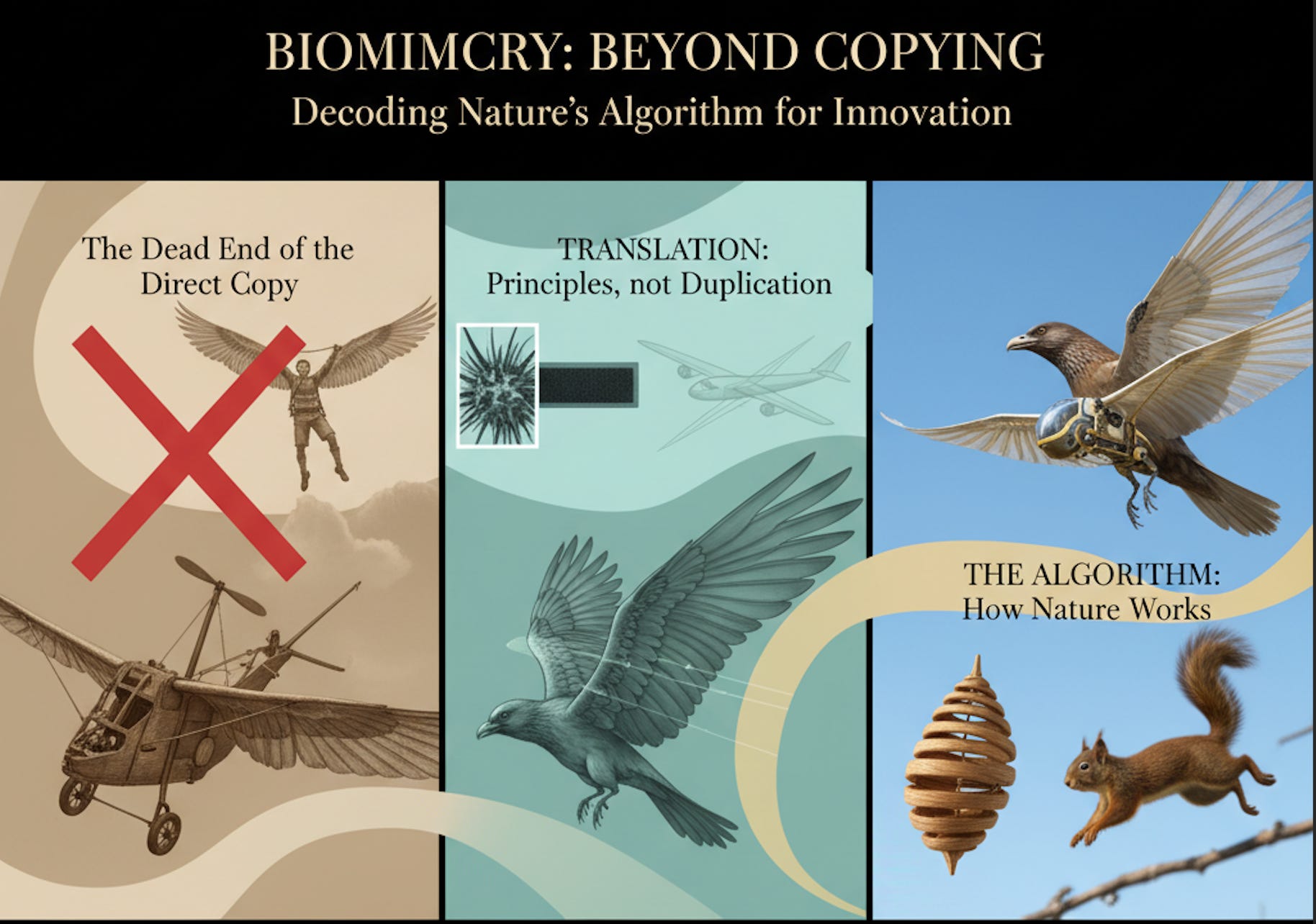
We are taught that biomimicry is about copying nature, but that is a lie.
See a bird, build a plane. See a burr, invent Velcro. This is just the surface. It is the first note in a symphony.
The real magic happens when we stop looking at what nature is and start understanding how nature works. Biomimicry is not about duplication. It is about translation.
We are standing in front of the world’s most advanced research and development lab, the natural world.
It has been running experiments for billions of years. Our job is to discern the winning principles.
The Dead End of the Direct Copy
The direct copy is our first, most intuitive instinct. It is also almost always a dead end.
Think about the early dream of flight. The vision was simple: humans with wings strapped to their arms. It was a literal, physical interpretation of a bird. The results were catastrophic.
Success only came when we abandoned the form to grasp the principle. We stopped trying to flap and started to understand lift. The modern airplane, with its fixed wings and roaring engines, is nothing like a bird. Yet, it flies because it obeys the same underlying laws of aerodynamics that a bird masters.
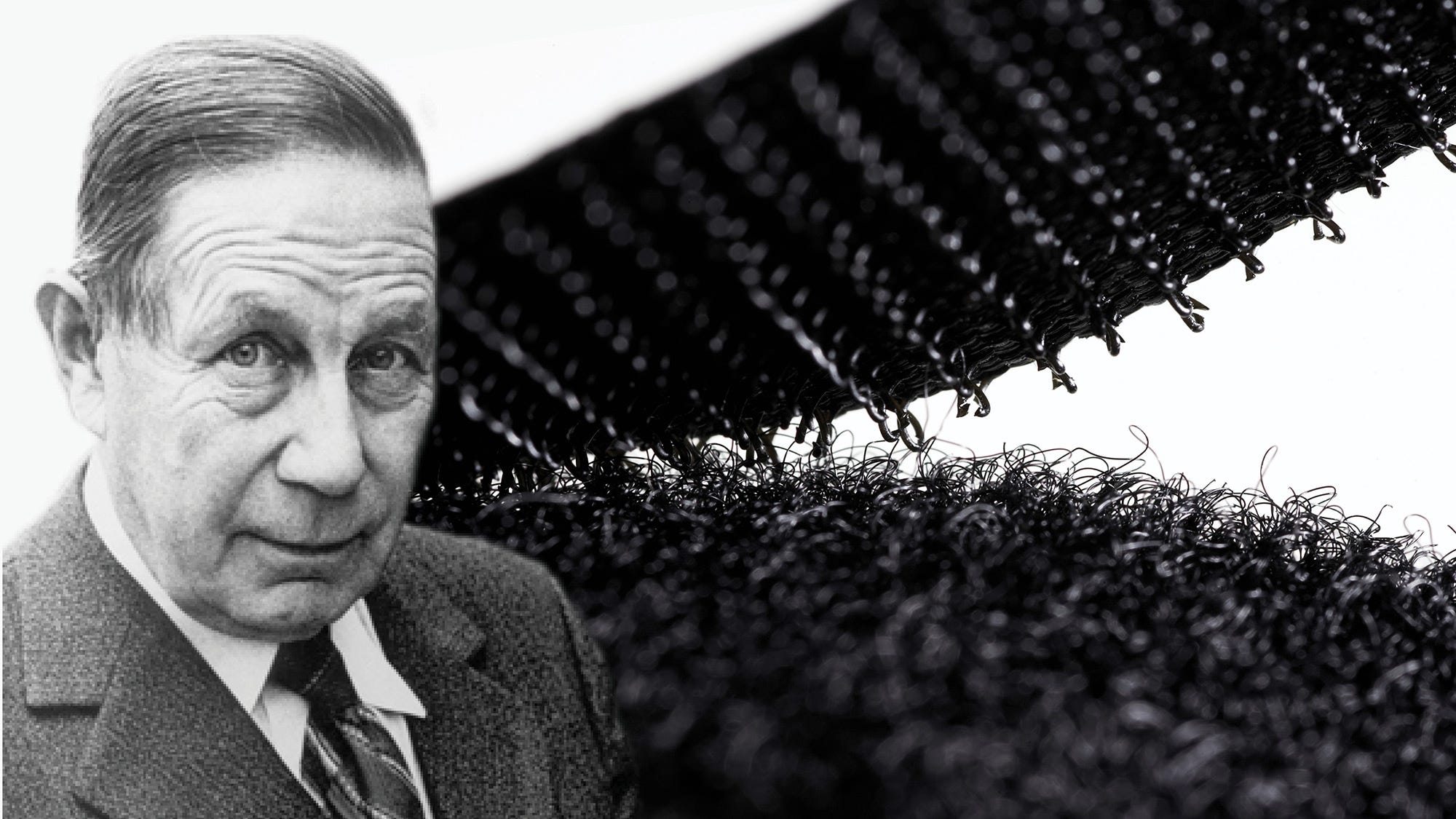
The story of Velcro follows the same path. The inventor, George de Mestral, didn’t just see a pesky burr. He saw a revolutionary fastening system. Under a microscope, he uncovered the core principle: a simple, elegant hook-and-loop mechanism. He translated that principle into a new technology, one far more versatile than the original plant ever needed to be.
Steal the Algorithm, Not the Appearance
This is where modern engineering sings. The secret is to move beyond the appearance and capture the underlying algorithm.
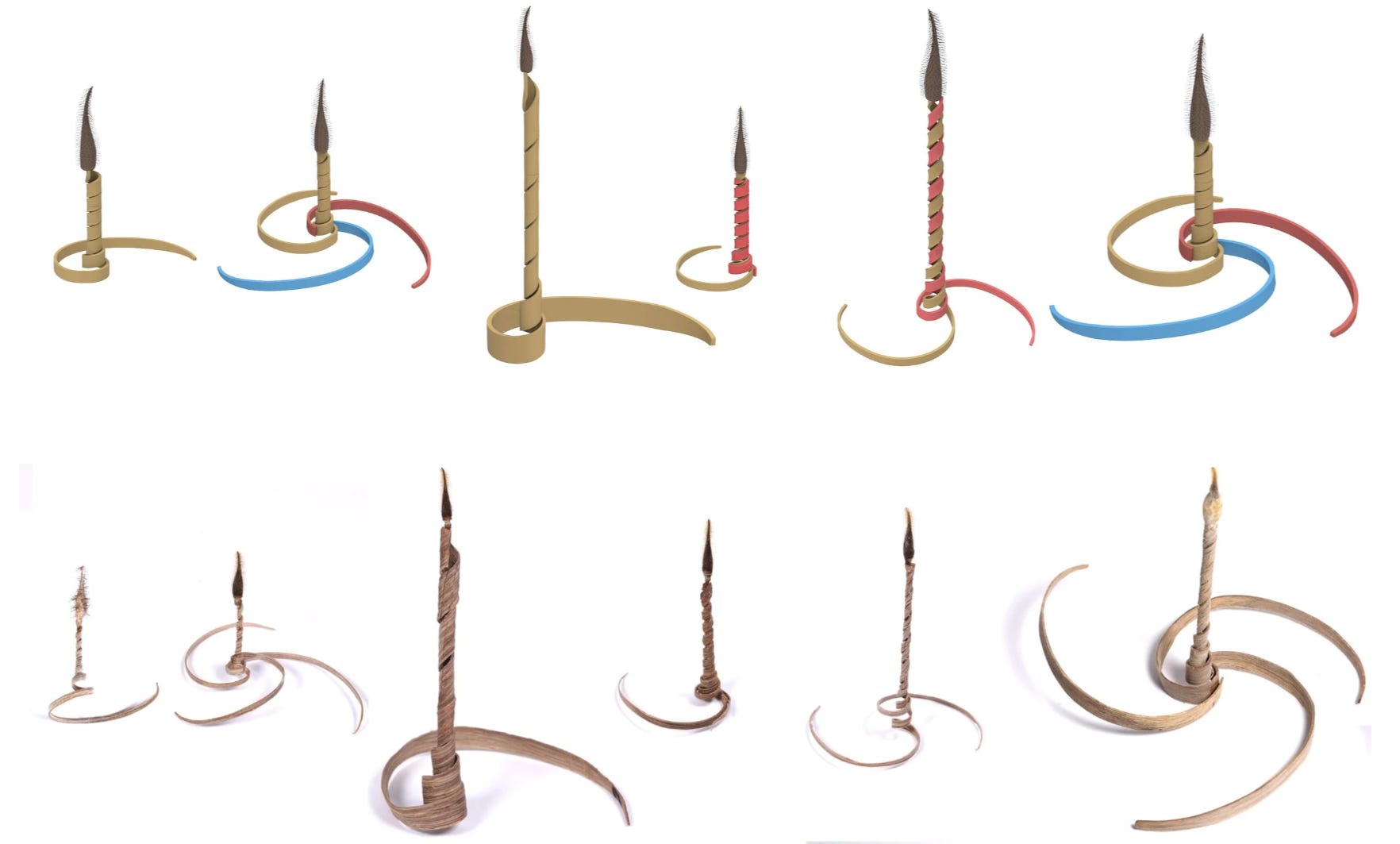
Consider the humble Erodium plant. Its seed has a coiled, hygroscopic tail that curls and uncurls with changes in humidity, slowly drilling the seed into the earth. Researchers at UC Berkeley’s Morphing Matter Lab didn’t build a robotic plant. They extracted the fundamental principle—a material that transforms using environmental energy. They then created a simple, elegant wooden device that performs the same function. They didn’t copy the plant; they decoded its algorithm for movement.
Now, look at the research from the same university on squirrels. Scientists are not building robotic squirrels. They are studying the complex physics and decision-making behind a squirrel’s leap. How does it calculate the flexibility of a branch in a split second? How does it adjust its trajectory to land on a moving, unstable surface?
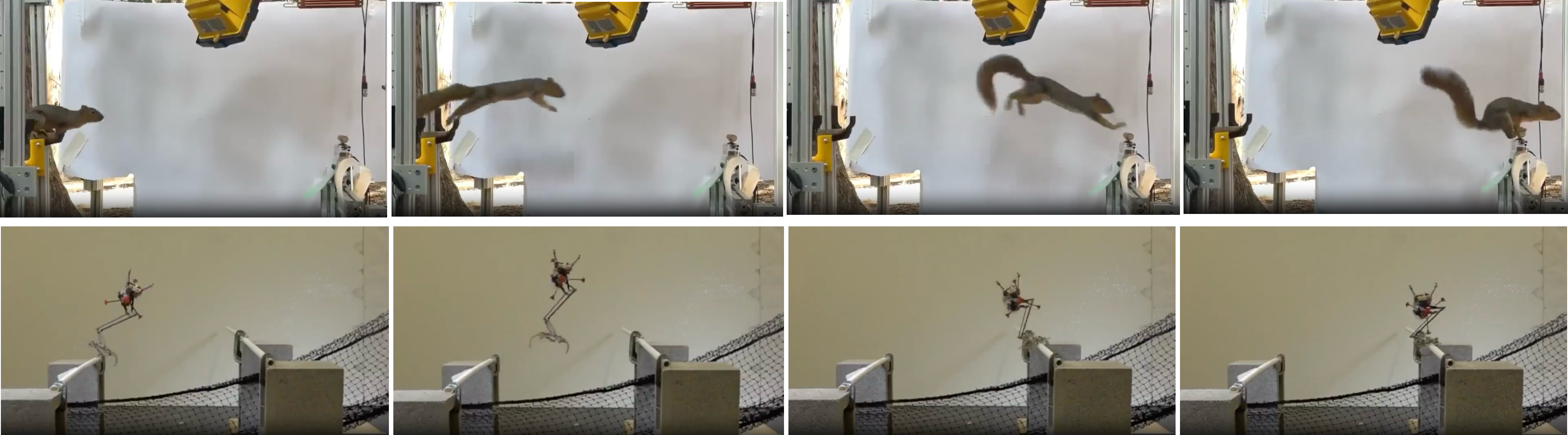
The goal is to distill the algorithms for dynamic, adaptive movement. This knowledge will eventually allow robots to navigate our world with a fraction of the grace and intelligence of a squirrel.
The Beautiful Return to Form
And here is the beautiful part. Once you truly master the principles, you can sometimes return to the form with breathtaking results.
The ornithopter is the perfect example. For decades, it was a symbol of failed biomimicry—a clunky machine that could not fly. But with a deep understanding of the complex aerodynamics of flapping flight, combined with modern materials, we have now succeeded.
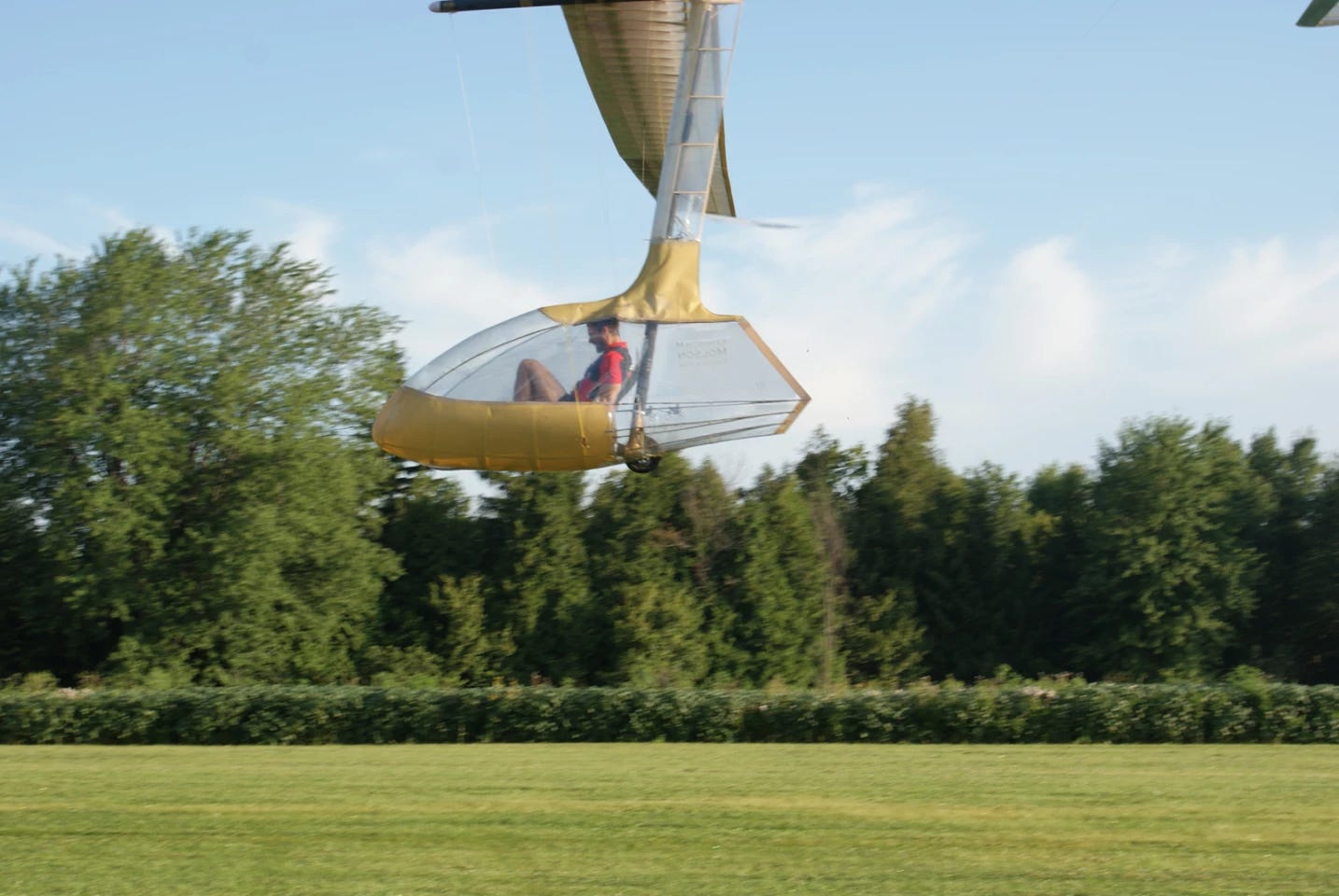
In 2022, a team at the University of Toronto Institute for Aerospace Studies achieved the first sustained, untethered flight of a robotic ornithopter. The machine, called the “Snowbird,” flies with the uncanny, beautiful grace of a large bird, its wings flapping in a rhythm perfected by nature. The circle is complete.
This is the real promise of looking to nature. It is not a catalog of designs. It is a university of principles.
If you want to build something truly revolutionary, do not ask what nature looks like.
Ask how nature thinks.
If this way of thinking about robotics sparks something in you, you should be reading this every week.
PS. Wondering how to start your robotics career? I help engineers navigate the transition. Reply to this email and let’s discuss your first step to get started.
Truly amazing!
Excellent article, thanks Srini.